
Key Won’t Turn in the Lock? Causes, Safe Checks & When to Call a Locksmith
A key won’t turn in lock situations can happen without warning, whether the key goes in but refuses to move, turns partway then stops, or only works when the door is held a certain way. The most important thing to remember is not to force it. Forcing a stiff or jammed key is one of the most common ways a simple fault turns into a broken key stuck inside the cylinder, which is a far more awkward problem to fix. This guide explains why a key won’t turn in lock mechanisms, what’s safe to check yourself, and when it makes sense to call a locksmith.
Key Won’t Turn in Lock: Common Causes
There are a handful of common reasons a key won’t turn in a lock, and narrowing down the likely cause can save time and prevent unnecessary damage. In general, the problem falls into one of these categories:
- The key itself is worn, bent, or was cut incorrectly.
- Dirt, dust, or wear inside the lock cylinder is affecting the pins.
- The door has shifted out of alignment, so the bolt can’t line up with the keep.
- The internal locking mechanism has developed a fault.
- On uPVC or composite doors, the multipoint locking system isn’t engaging correctly.
Working through these possibilities in order is usually the quickest way to understand what’s going on before deciding whether it’s a job for a locksmith.
1. The Key Is Worn, Bent or Damaged
Keys wear down gradually with everyday use, and the edges that once sat precisely against the pins can become smooth or slightly reshaped over time. This is especially common with keys that have been copied more than once, since each duplicate can introduce small inaccuracies that add up. A key that looks fine may still be the reason a lock won’t turn, so it’s worth trying the original key or a known spare before assuming the fault lies elsewhere. If a key is visibly bent, it shouldn’t be forced into a lock at all, as bending it further increases the risk of it snapping while inserted.
2. Dirt or Wear Inside the Lock Cylinder
A stiff door lock is often the result of dust, grit or general wear building up inside the cylinder over months or years. As the internal pins and springs age, they can respond less predictably to a key, even one that’s in good condition. This is a sign that the cylinder is gradually wearing out rather than failing outright. It’s best not to improvise with household oils or lubricants, as some can attract more dust or leave a residue that makes the problem worse. If a lock has become increasingly stiff over time, this is worth mentioning to a locksmith rather than trying to flush or clean the cylinder yourself.
3. The Door May Be Out of Alignment
One of the most useful diagnostic checks is comparing how the key behaves when the door is open versus closed. If the key turns easily while the door is open but becomes a jammed lock the moment the door is shut, the cylinder itself is probably fine and the issue is more likely to be door alignment. Dropped hinges, misaligned keeps, and seasonal movement in the frame can all cause the bolt to bind against the strike plate. This is particularly common with uPVC and composite doors, where even a small shift in alignment can prevent the multipoint locking points from lining up correctly. A locksmith can usually resolve this without replacing the lock at all.
4. A Faulty Lock Mechanism or Multipoint Lock
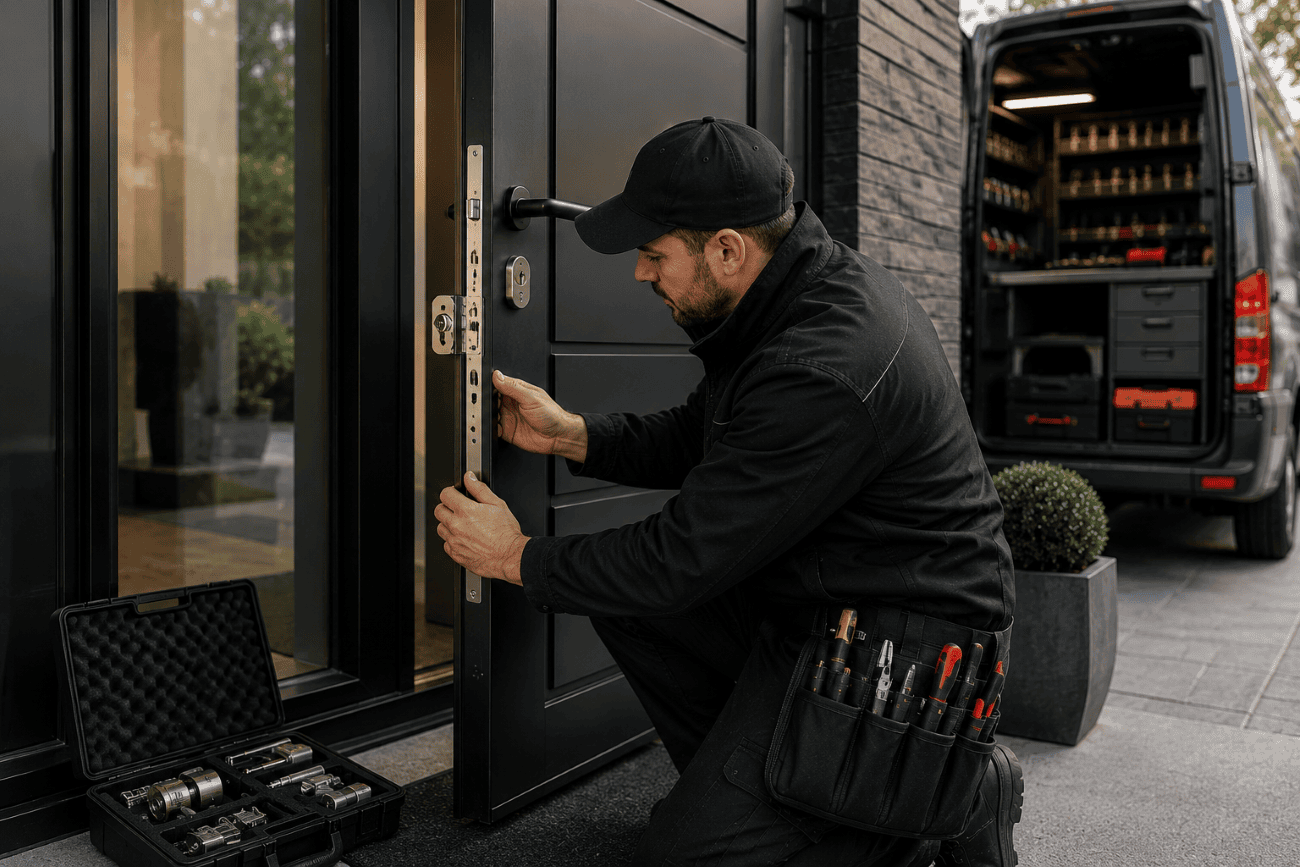
Not every stiff or unresponsive lock is a cylinder problem. Sometimes the fault sits with the internal mechanism that translates the turn of the key into the movement of the bolt, or with the wider multipoint locking system found on many modern doors. A cylinder issue tends to affect how the key itself feels, while a mechanism or multipoint fault can mean the key turns but the door doesn’t lock or unlock as expected. Because these systems are more complex to diagnose accurately, it’s not something to attempt to open up or bypass without the right experience.
Safe Things to Check Before Calling a Locksmith
Before deciding a locksmith is needed for a key won’t turn in lock situation, a few safe checks can help clarify the problem:
- Never apply excessive force to a key that won’t turn.
- Try a different, known-working key if one is available.
- Note whether the lock behaves differently with the door open compared to closed.
- Pay attention to how the handle feels, as a stiff handle can sometimes point to the same underlying issue.
- Stop immediately if the key starts to bend or feels like it’s catching, rather than continuing to try.
- When you do call for help, check the locksmith holds a valid licence from the Private Security Authority, Ireland’s regulator for the security industry.

When to Call a Locksmith for a Key That Won’t Turn
Some situations call for professional help rather than continued troubleshooting. It’s time to contact a locksmith when:
- The key is completely stuck and won’t turn or come back out.
- There’s a risk the key could snap if you try again.
- The door is left locked and inaccessible.
- A lock that worked normally has suddenly stopped working.
- The door can no longer be locked securely.
- The problem keeps happening even after trying a different key.
If you’re locked out or the situation feels urgent, an emergency locksmith can attend and assess the lock without unnecessary delay.
Lock Repair or Lock Replacement?
Not every key won’t turn in lock case ends in a full lock replacement. In many cases, the underlying issue is something a professional lock repair can resolve, whether that’s realigning the door, addressing a worn cylinder, or fixing an internal component. Other times, particularly where a lock is old, badly worn or has been damaged, a lock replacement is the more sensible long-term option. A locksmith can inspect the lock in person and explain which approach fits the condition of your door, rather than assuming the worst straight away.
Locksmith Help Across Carlow and Surrounding Areas
AutoKeyMaster provides locksmith assistance for lock and key problems across Carlow and surrounding areas, including Kilkenny, Portlaoise, Tullow, Athy, Newbridge, Kildare, Leighlinbridge and Borris. Whether a key won’t turn in lock, a door has fallen out of alignment, or a multipoint mechanism needs attention, help is available for homeowners throughout the region. If you’d like advice on a specific lock, feel free to contact AutoKeyMaster to discuss the problem.
Frequently Asked Questions
Why does my key turn when the door is open but not when it is closed?
This usually points to a door alignment issue rather than a fault with the key or cylinder. Dropped hinges or a shifted frame can prevent the bolt from lining up once the door is shut.
Can a worn key stop turning in a lock?
Yes. Keys wear down with use, and worn or poorly cut duplicates are a common reason a key won’t turn smoothly, even if the lock itself is in good condition.
Should I force a key that won’t turn?
No. Forcing a jammed or stiff key increases the risk of it snapping inside the cylinder, which turns a manageable problem into a more difficult one to fix.
Does a key that won’t turn always mean the lock needs replacing?
Not necessarily. Many cases are resolved through lock repair, such as adjusting door alignment or addressing a worn cylinder, rather than full replacement.
Can a locksmith repair a multipoint door lock?
Yes, a locksmith experienced with uPVC and composite doors can assess a multipoint locking system and carry out the appropriate repair.
For more general guidance, you can browse more locksmith advice from AutoKeyMaster.
Frequently Asked Questions
Why does my key turn when the door is open but not when it is closed?
This usually points to a door alignment issue rather than a fault with the key or cylinder. Dropped hinges or a shifted frame can prevent the bolt from lining up once the door is shut.
Can a worn key stop turning in a lock?
Yes. Keys wear down with use, and worn or poorly cut duplicates are a common reason a key won't turn smoothly, even if the lock itself is in good condition.
Should I force a key that won't turn?
No. Forcing a jammed or stiff key increases the risk of it snapping inside the cylinder, which turns a manageable problem into a more difficult one to fix.
Does a key that won't turn always mean the lock needs replacing?
Not necessarily. Many cases are resolved through lock repair, such as adjusting door alignment or addressing a worn cylinder, rather than full replacement.
Can a locksmith repair a multipoint door lock?
Yes, a locksmith experienced with uPVC and composite doors can assess a multipoint locking system and carry out the appropriate repair.