
Worn House Keys: Signs It’s Time to Replace Your Key
A worn house key doesn’t usually fail overnight. It tends to give small warning signs first: a little more resistance when turning, an occasional need to jiggle the key, or a slightly different feel compared to when it was new. Recognising a worn house key early can help you replace it before it lets you down completely or, worse, snaps while it’s in the lock. This guide explains what to look for, why keys wear out, and how to tell whether the problem lies with the key or the lock itself.
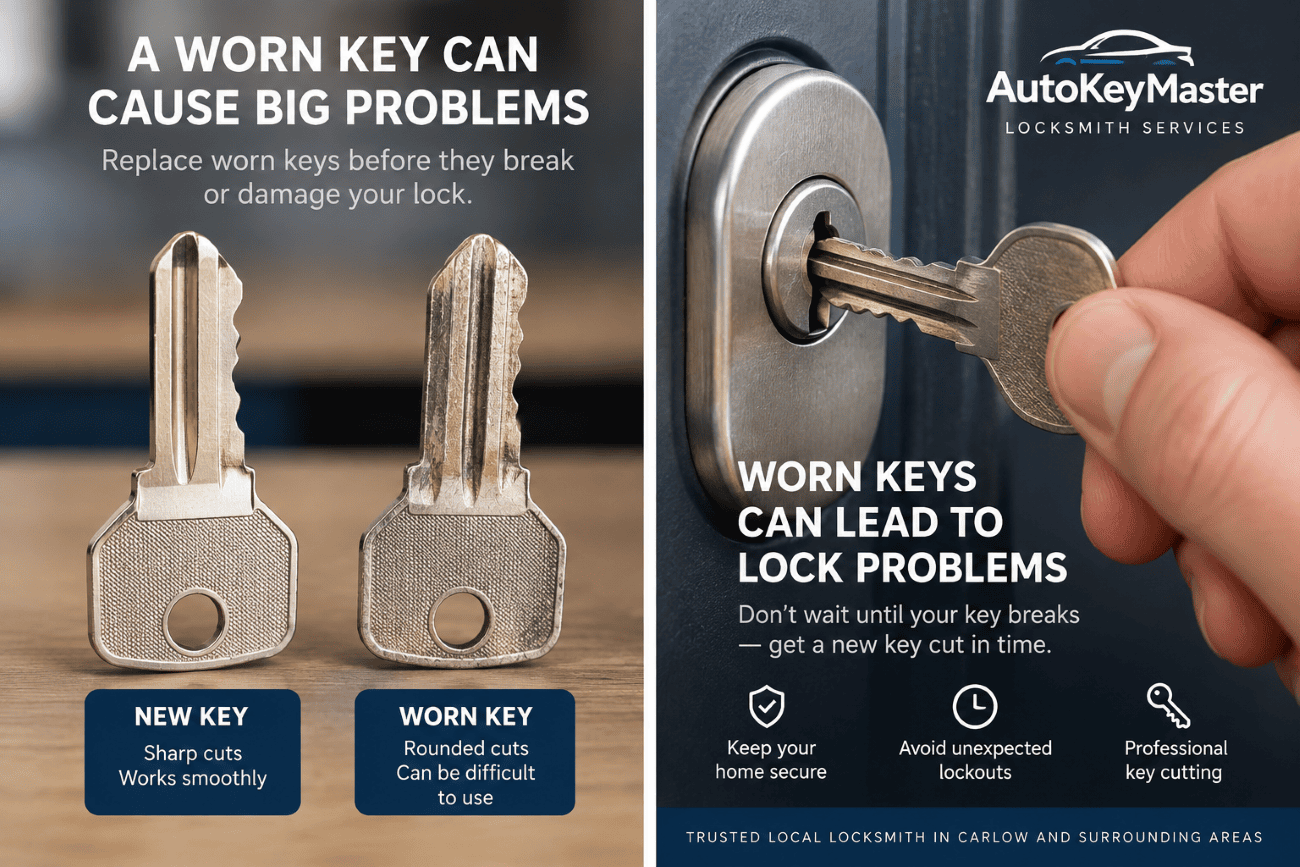
Signs of a Worn House Key
Most worn keys show physical signs before they stop working altogether. It’s worth checking your everyday keys occasionally for:
- Rounded or smoothed-off edges where the cuts used to be sharp and defined.
- A key that turns inconsistently, working fine one day and sticking the next.
- A need to jiggle or wiggle the key to get it to catch and turn.
- The key feeling stiff going in, coming out, or turning in the cylinder.
- Visible thinning, bending, or a shinier, worn appearance along the blade.
Any one of these on its own might not mean much, but a worn house key showing several of these signs together is usually close to the end of its useful life.
Why Do House Keys Wear Out?
Keys are used dozens of times a week, and that everyday friction against the pins inside the cylinder gradually wears down the metal. The cuts that once matched the lock precisely become slightly rounded, which changes how the key sits against the pins. Keys carried loose in a pocket or bag alongside coins and other metal objects tend to wear faster, as do older keys made from softer metal. It’s a completely normal process, but it does mean every key has a working lifespan, and a worn house key is simply one that’s reached the point where it can no longer be relied upon.
Can a Worn Key Damage Your Lock?
A worn key doesn’t just become inconvenient to use, it can also affect the lock itself over time. Because a worn key no longer sits correctly against the pins, using it repeatedly can accelerate wear inside the cylinder as well. In more serious cases, a badly worn key that’s forced when it sticks can snap off inside the lock, which usually means calling a locksmith for a more involved lock repair rather than a simple key replacement. Avoiding force and replacing a worn house key promptly is the simplest way to protect the lock alongside the key.
Worn Key or Faulty Lock: How to Tell
One of the most useful checks is comparing how a spare key behaves in the same lock. If a spare or original key turns smoothly while your everyday key sticks or needs jiggling, the problem is very likely the key rather than the lock. On the other hand, if every key you try struggles in the same way, particularly if the lock feels stiff, catches, or works differently depending on whether the door is open or closed, the issue is more likely with the lock or the door’s alignment. It’s not accurate to assume every stiff lock means a worn key, or the other way around; a locksmith can usually confirm which one is the actual cause after a quick inspection, similar to the checks covered in our guide on a key that won’t turn in the lock.
Should You Copy a Worn Key?
Copying a worn house key is generally not a good idea, because a key cutting machine can only trace the shape of the key you provide, rounded edges and all. This means any inaccuracies from wear get carried over to the new copy, sometimes making the duplicate perform worse than the original. Where possible, it’s better to cut a new key from a key that’s still sharp and accurate, such as a rarely used spare, or to have a locksmith code-cut a fresh key directly from the lock. This is also the safer approach if a key has already broken, rather than attempting to work around a broken key in a lock without help.
When Should You Replace an Old Key?
As a general rule, it’s worth replacing a key once you notice two or more of the warning signs mentioned earlier, rather than waiting for it to fail completely. Keys that are visibly bent, unusually thin, or that only work with a specific amount of jiggling are close to the point of failure and are best replaced before they let you down at an inconvenient moment, such as arriving home late or heading out for work. Replacing a worn house key while it still works is a small, low-cost precaution compared to dealing with a snapped key or being locked out.
When to Call a Locksmith
It’s a good idea to call a locksmith if a key has become difficult or unreliable to use, if you’re not sure whether the fault lies with the key or the lock, or if a key has already started to bend or feels like it could snap. A locksmith can cut an accurate replacement key, check the condition of the lock, and advise whether a lock replacement is worth considering if the cylinder itself is old or worn. When choosing who to call, it’s worth confirming they hold a valid licence from the Private Security Authority, Ireland’s regulator for the security industry.

AutoKeyMaster provides professional locksmith assistance throughout Carlow and surrounding areas, including Kilkenny, Portlaoise, Tullow, Athy, Newbridge, Kildare, Leighlinbridge and Borris, for worn keys, lock faults, and general lock and key problems.

If you’re unsure whether your key or lock needs attention, feel free to contact AutoKeyMaster, or browse more locksmith advice for further guidance.
Frequently Asked Questions
How can I tell if my key is worn?
Look for rounded or smoothed cuts, a key that turns inconsistently, a need to jiggle it to catch, or a stiff feel going in, coming out, or turning.
Can a worn key damage a lock?
Yes. A worn key sitting incorrectly against the pins can accelerate wear inside the cylinder, and forcing a sticking key can cause it to snap.
Is it safe to copy a worn key?
Copying a worn key carries over its inaccuracies to the new copy. It's better to cut from a sharp spare or have a locksmith code-cut a fresh key from the lock.
How do I know if the problem is the key or the lock?
Try a spare or original key in the same lock. If it turns smoothly while your usual key sticks, the key is likely the cause rather than the lock.
When should I call a locksmith about a worn key?
Call a locksmith if a key is difficult or unreliable to use, if you're unsure whether the key or lock is at fault, or if the key feels close to bending or snapping.