
A Lock Is Hard to Operate? The Problem May Be Your Door, Not the Lock
When a lock suddenly becomes hard to turn, or a door needs to be pulled or pushed before the key will work, it’s natural to assume the lock itself has failed. In many cases, though, door alignment affecting lock performance is the real cause, and the lock mechanism may be perfectly healthy. This guide explains how a shifting door can put pressure on a lock, the signs to watch for, and why reaching for the oil can is not always the right first step.
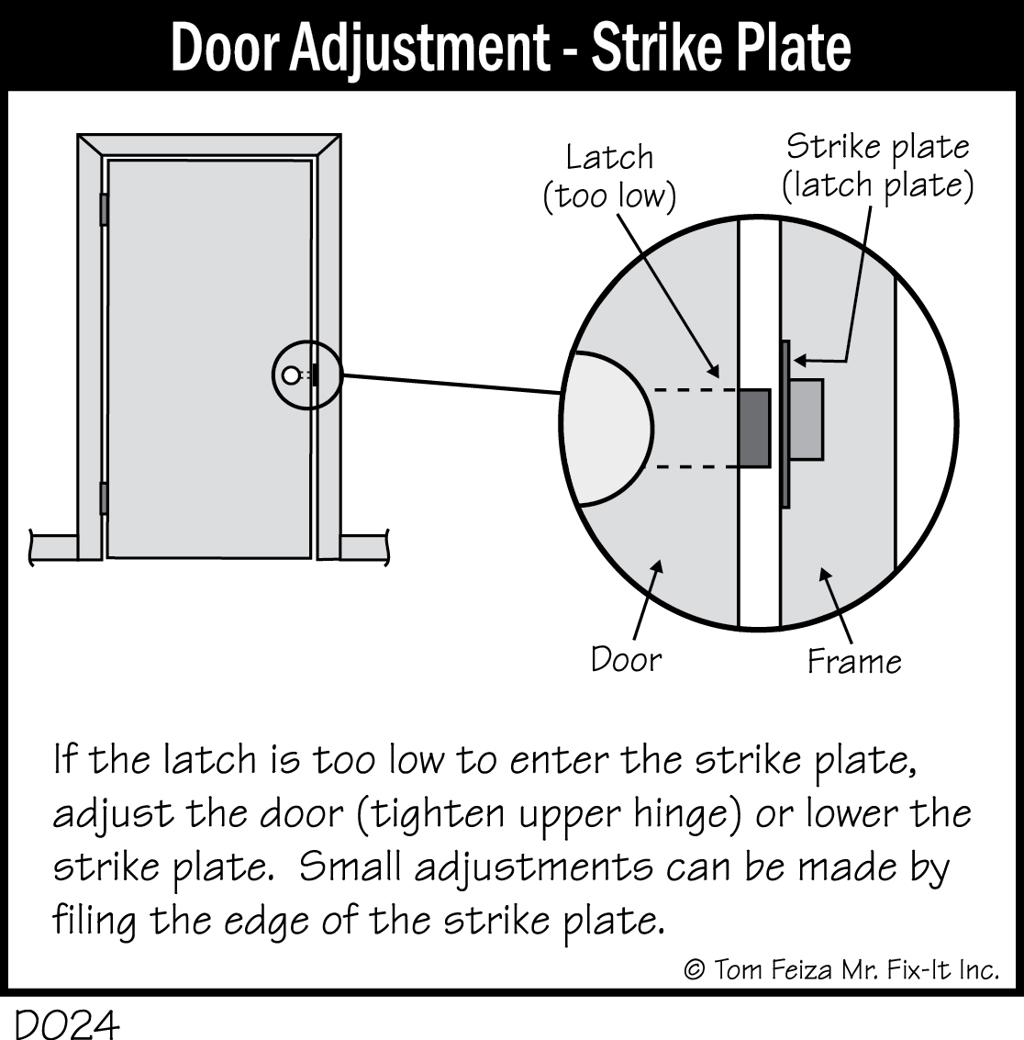
How Door Alignment Affecting Lock Performance Creates Problems
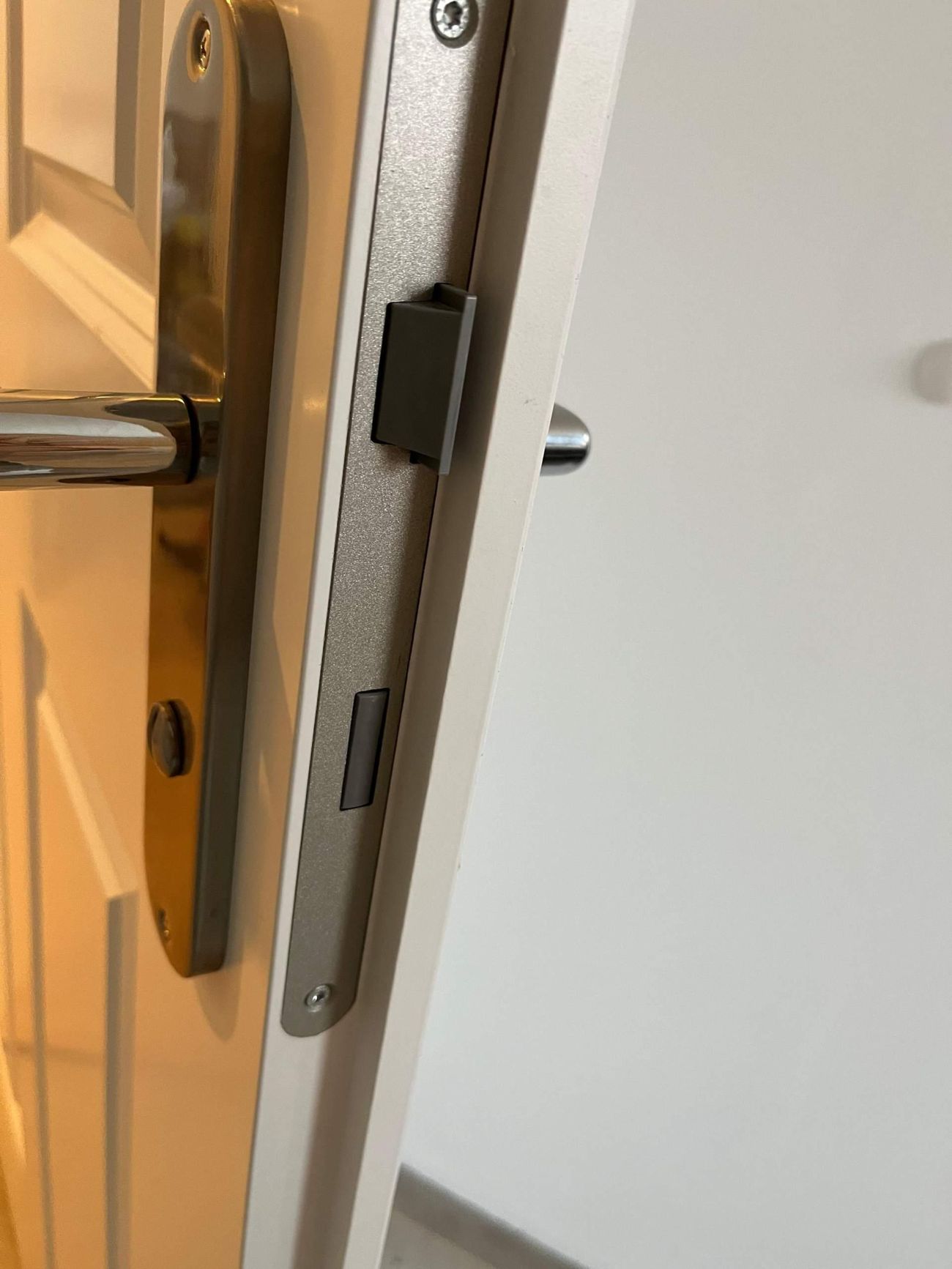
A lock is designed to work with the bolt or latch moving freely into a keep fitted in the door frame. When the door itself shifts, even slightly, that relationship changes. The bolt may need to push harder against the keep to engage, or the latch may catch at an angle instead of sliding smoothly. This is door alignment affecting lock performance in its simplest form: the lock hasn’t changed, but the position of the door around it has, and the mechanism ends up working under load every time it’s used.
Signs Your Door May Be Causing the Lock Problem
Before assuming a lock needs repair or replacement, it’s worth checking whether the door itself is behaving differently. Common signs include:
- Needing to lift the door slightly before the key will turn.
- Having to pull or push the door while turning the key to get it to lock or unlock.
- The lock working easily when the door is open but resisting once it’s closed.
- Noticeably more effort needed to turn the key with the door shut.
- The key starting to feel stiff even though it hasn’t changed.
- The door visibly sitting differently in the frame than it used to.
Seeing several of these together is a strong indicator that door alignment affecting lock performance, rather than the lock itself, is behind the problem.
A Sagging Door Can Put Extra Pressure on a Lock
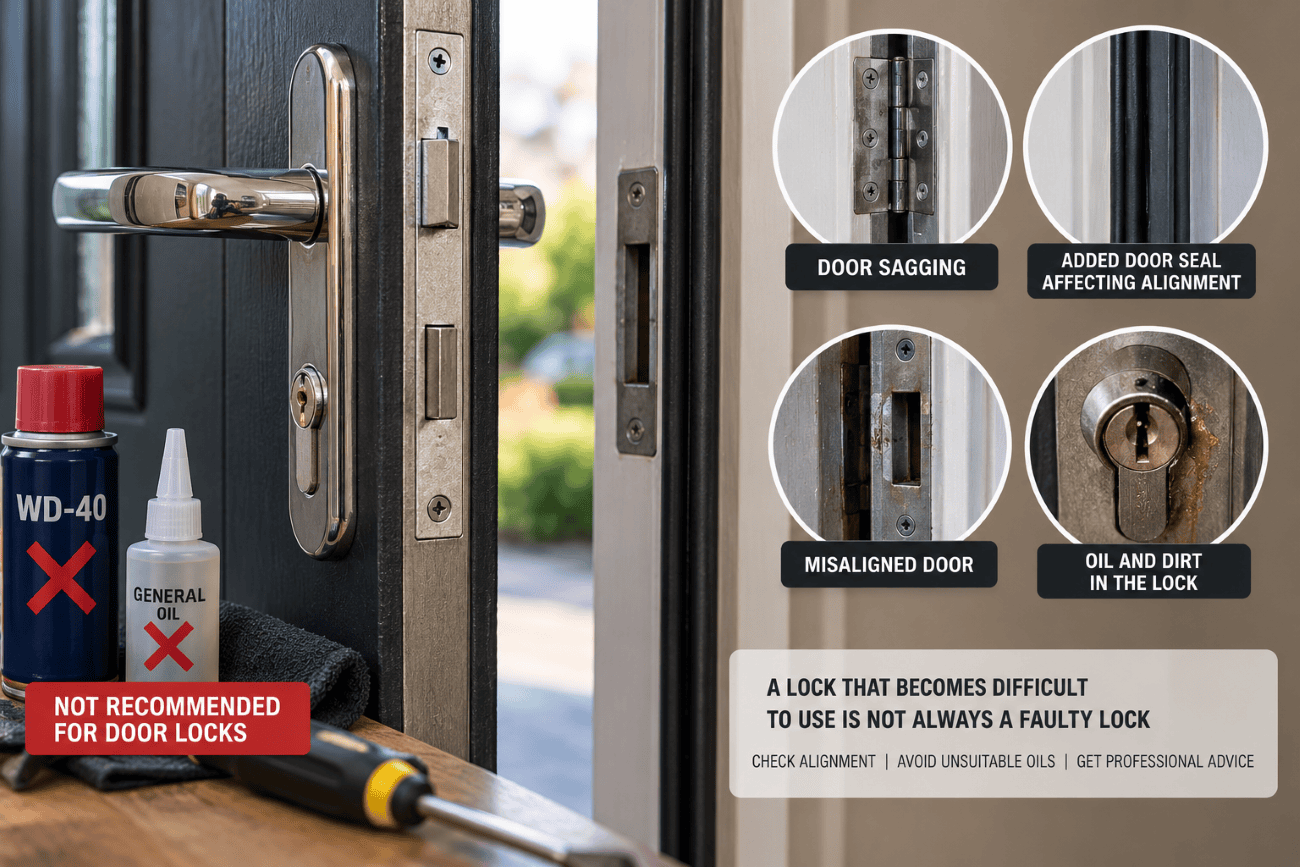
Doors, especially heavier timber or composite doors, can gradually sag on their hinges over months or years. As the door drops slightly, its position relative to the frame and keep shifts, which changes how the bolt and latch line up. This kind of gradual movement is one of the most common ways door alignment affecting lock performance develops, since the change happens slowly enough that it’s easy to put up with increasing stiffness rather than recognising it as a door problem.
Can New Door Seals Change How a Lock Works?
Replacing worn weatherstripping or draught seals is a sensible maintenance step, but it can also change how the door closes. New seals are often thicker or firmer than the ones they replace, which can shift the door’s closing position and increase the pressure it places against the frame. This isn’t always the cause of a stiff lock, but it’s a genuine possibility worth considering if a lock became noticeably harder to operate around the same time new seals were fitted. In these cases, the issue is really a change in the door’s geometry and pressure rather than a fault developing inside the lock itself.
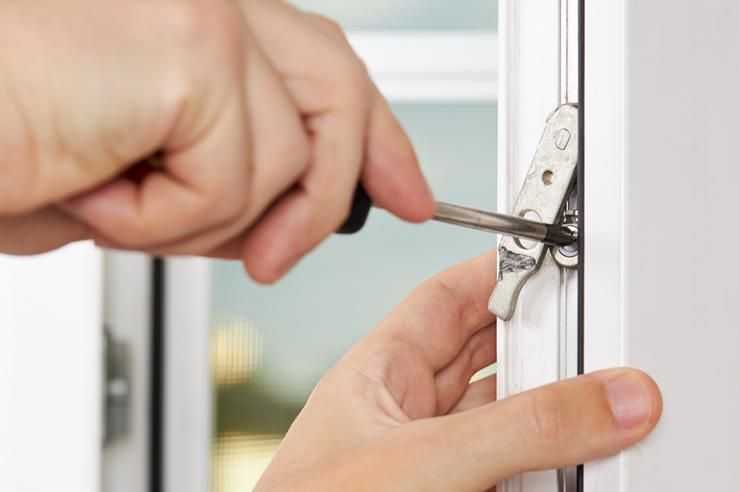
Why Pouring Oil Into a Lock Can Make Things Worse
A common reaction to a stiff lock is to reach for a household oil, WD-40, or whatever lubricant happens to be nearby, and spray it into the keyhole. It’s understandable, but it’s not always the right response. If the resistance is coming from door alignment affecting lock performance rather than a dry or worn mechanism, lubrication does nothing to correct the door’s position, and the underlying pressure on the bolt or latch remains exactly the same. Worse, some household oils and sprays attract dust and grit over time, which can build up inside the mechanism and gradually make things less reliable rather than more. Understanding the cause of the resistance first is a better starting point than treating every stiff lock the same way.
It’s worth noting this connects to another common question homeowners have: our guide on a key that won’t turn in the lock covers a related situation, where a stiff or unresponsive key can have several possible causes, and the problem isn’t always inside the cylinder or mechanism itself.
When Door Alignment Affecting Lock Performance Needs Professional Attention
Some situations are worth acting on rather than living with. It’s time to get the door and lock looked at professionally when the key is becoming steadily harder to turn, when the door needs to be lifted or held in position every time it’s locked, when the lock only works properly with the door open, when there’s noticeably strong resistance when closing or opening, when the problem seems to be gradually getting worse, or when there’s a real risk the lock could fail completely and leave the door unable to be secured or opened.
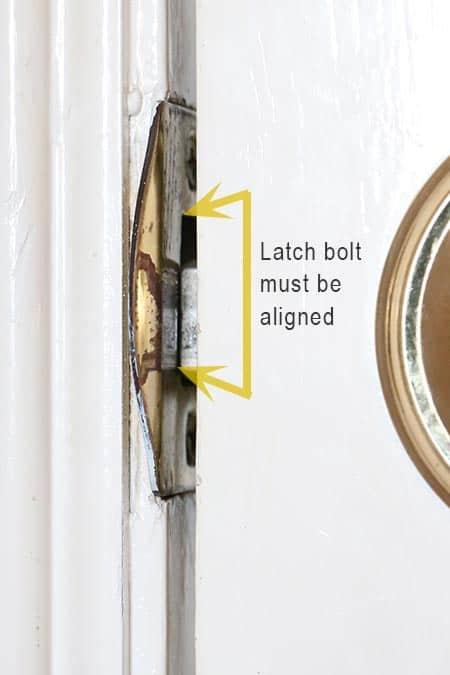
Repairing the Cause Instead of Replacing a Working Lock
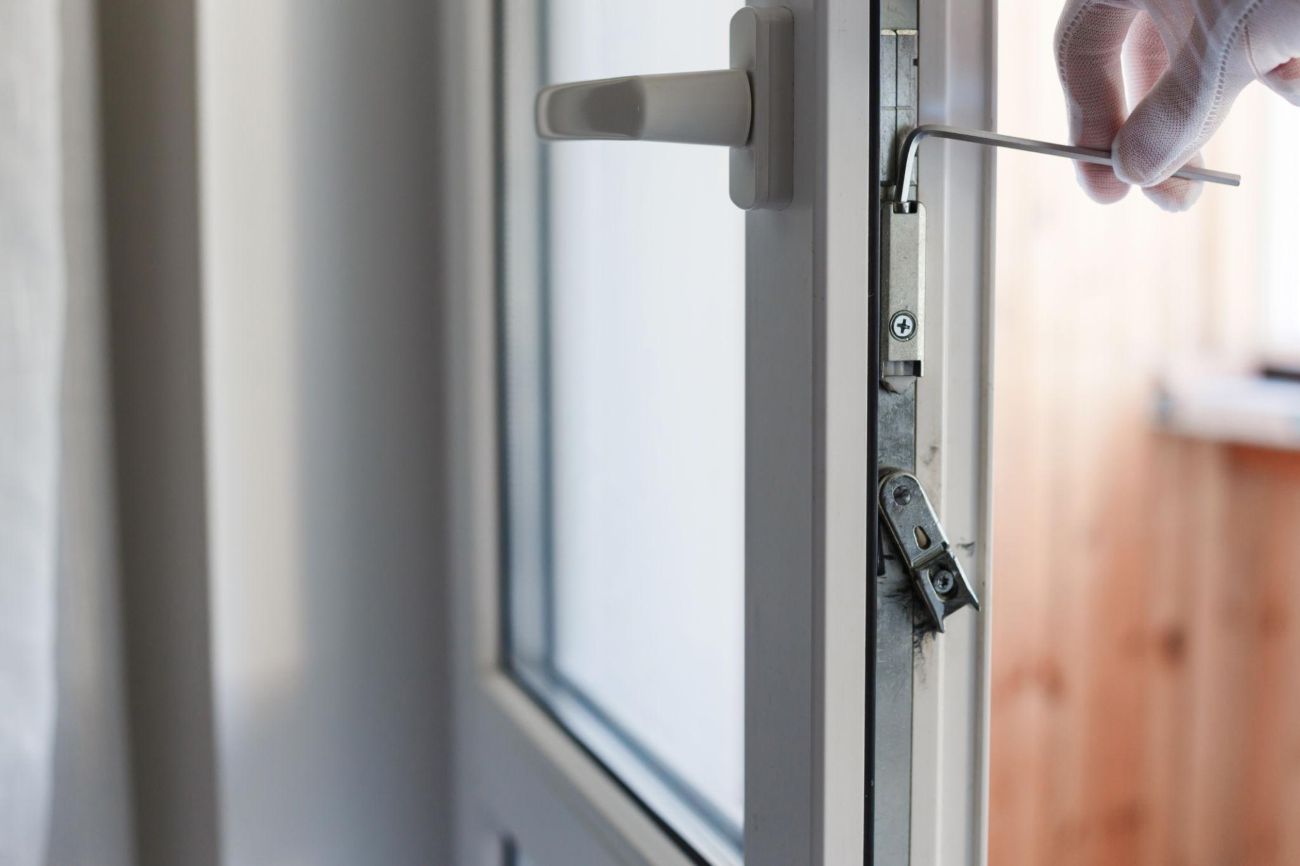
A good locksmith won’t assume a lock needs replacing just because it’s become difficult to use. The first step is identifying the actual cause, which might mean adjusting the door’s hinges or position, relieving pressure on the keep, carrying out a targeted lock repair, adjusting or repositioning the keep itself, or, where a mechanism really has been damaged by prolonged strain, replacing the affected component. For a door that’s had ongoing alignment problems, a fresh lock installation can also be an opportunity to correct fit issues at the same time. Not every hard-to-operate lock needs a full lock replacement, and a professional assessment helps avoid paying for more than the situation actually calls for. When choosing who to call, it’s worth being aware of the PSA licensed locksmith requirements in Ireland, which help confirm you’re dealing with a properly regulated professional.
Don’t Wait Until the Door Will Not Open
Door alignment affecting lock performance rarely causes a lock to fail without warning. The signs tend to build gradually, and catching the problem early is usually far simpler than dealing with a lock that has stopped working altogether, often at an inconvenient moment. For homes in Carlow and surrounding areas, including parts of Kilkenny, Laois and Kildare, an early check-up is a small step that can prevent a much more stressful situation later. If a door is genuinely stuck and can’t be opened safely, an emergency locksmith can attend and assess the problem without delay.
If your lock has become difficult to operate, it’s worth having both the door and the lock assessed together rather than assuming the fault lies in one or the other. You can contact AutoKeyMaster to arrange an assessment, or browse more locksmith advice, including our guide on worn house keys, for related issues that can also make a lock harder to use.
Frequently Asked Questions
Why does my lock only work when the door is open?
This usually points to door alignment affecting lock performance rather than a fault inside the lock, since closing the door changes how the bolt lines up with the keep.
Can a sagging door affect a lock?
Yes. As a door gradually drops on its hinges, its position relative to the frame changes, which can put extra pressure on the bolt or latch and make the lock harder to operate.
Should I lubricate a stiff lock?
Not automatically. If the stiffness is caused by door alignment rather than a dry mechanism, lubrication won't fix the underlying cause and can attract dust over time.
Does a hard-to-turn lock always need replacing?
No. Many cases are resolved by adjusting the door or keep rather than replacing the lock, once a locksmith identifies the actual cause.