
Lost House Keys: What to Do and When Should You Change the Locks?
Lost house keys can mean two very different situations. Sometimes a key has gone missing but you can still get into the house through another door, and the main concern is whether the missing key is a security risk. Other times, every key is gone and you’re standing outside unable to get in at all. Both situations raise the same underlying question: do you need to change the locks, and if so, how much of the lock actually needs replacing? This guide walks through the safe first steps, how to judge the real security risk, and the practical difference between replacing a cylinder and replacing an entire lock.
Lost House Keys: First Steps to Take
Before assuming the worst, it’s worth taking a calm, methodical look at where the keys might be. Retrace recent journeys, check coat pockets, bags, cars, and any place you’ve set keys down out of habit. Confirm whether the key is genuinely lost rather than simply misplaced somewhere in the house. It’s also worth thinking about whether anything found with the keys, such as a tag, fob, or attached item, could allow someone to identify which house they open. If there’s no way to connect the key to your address, the situation is generally lower risk than if the keys were found alongside something identifying, such as post or a wallet.
When Lost House Keys Become a Security Risk
A missing key on its own isn’t automatically an emergency, but certain circumstances raise the risk considerably. Lost house keys become more concerning when they were lost together with items such as identification documents showing your address, a handbag or wallet, a keyring with an obvious identifying tag, or when the keys are known or suspected to have been stolen rather than simply dropped. Not knowing exactly where or how the keys went missing also adds uncertainty. In any of these situations, it’s worth understanding when lock replacement is necessary rather than waiting to see if anything happens.
Do You Always Need to Change the Locks After Losing Keys?
Not every case of lost house keys means the whole lock has to be replaced. On many modern doors, the lock body, handles, and mechanism can be perfectly sound, and the only realistic security measure needed is replacing the cylinder, which is the part the key actually operates. A locksmith can assess the existing hardware and confirm whether a full lock repair or a straightforward cylinder swap is the more appropriate response, rather than defaulting to replacing everything.
Lost Keys and Euro Cylinder Replacement
Many uPVC, composite, and modern timber doors use a euro cylinder, which is the specific part removed and replaced when addressing lost house keys. What’s often overlooked is that a euro cylinder generally needs to be in a particular working position within the door mechanism before it can be properly removed. If every key has been lost and the door is locked, a locksmith may first need to gain legitimate access to the door and bring the mechanism into the correct position before the cylinder itself can be taken out and replaced. This is one reason why losing all keys does not always mean a cylinder can simply be removed from a locked door without professional access work first, and it’s part of why this kind of job is best left to someone experienced with the specific door and lock type involved.

When to Call a Locksmith After Losing Your Keys
It’s time to call a locksmith when every key to the property has been lost, when you can’t get into your home at all, when the keys are known to have been stolen, when there’s a realistic chance the keys can be traced back to your address, or when the door has a multipoint locking system that needs a cylinder or lock replacement. If you’re locked out and need to get in straight away, an emergency locksmith can attend and assess both the access issue and the security question at the same time.
Should You Replace the Lock or Just the Cylinder?
A cylinder replacement is usually enough when the door itself is modern, uses a standard euro cylinder, and the rest of the locking mechanism is working correctly. A more substantial lock replacement becomes worth considering when the lock is damaged, the mechanism isn’t operating smoothly, there’s visible wear beyond the cylinder, such as the kind of issues covered in our guide on worn house keys, or when you want to move to a higher security standard than what’s currently fitted. A locksmith can explain which option genuinely fits your door rather than recommending the most expensive one by default.
Can You Use a Spare Key?
Having a spare key solves the immediate access problem, but it doesn’t necessarily solve the underlying security question. If the lost key could realistically be linked to your home, the fact that you have a working spare doesn’t remove the risk that whoever has the lost key could also gain access. It’s worth weighing up the circumstances of how the key went missing before deciding that a spare key is a complete solution on its own.
How a Professional Locksmith Can Help
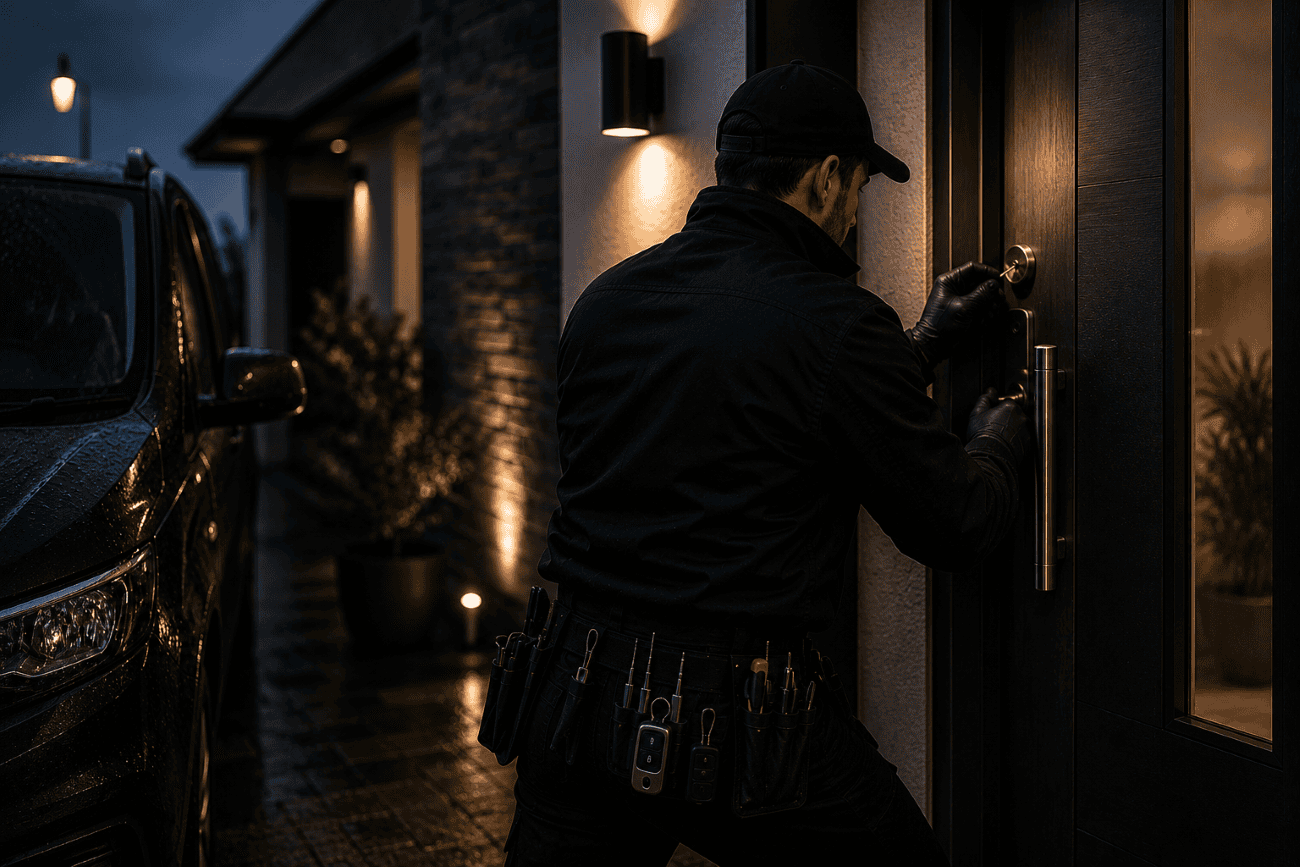
A professional locksmith handling a lost key situation will typically confirm that you’re entitled to access the property before carrying out any opening work, assess the door and lock honestly rather than assuming the worst, open the door if needed, replace the cylinder or lock as appropriate, and check that the door operates correctly once the work is complete. Confirming a customer’s identity and right to request access before opening a door is standard practice among properly regulated locksmiths, and it’s a reasonable sign that you’re dealing with a professional rather than someone cutting corners.

Lost House Keys in Carlow and Surrounding Areas
If you have lost house keys in Carlow or surrounding areas, including Kilkenny and Laois, a locksmith can assess whether you simply need access to your property or whether replacing the cylinder is the safer option. AutoKeyMaster provides locksmith assistance for exactly this kind of situation across the region.
Frequently Asked Questions
Do I need to change my locks if I lose my house keys?
Not always. If the keys can’t be linked to your address, the risk may be low. If they were lost with identifying items or stolen, replacing the cylinder or lock is the safer choice.
Can a locksmith replace a euro cylinder if I have lost all keys?
Yes, though if the door is locked, a locksmith may first need to gain legitimate access and bring the mechanism into position before the cylinder can be removed and replaced.
Is replacing a cylinder cheaper than replacing the whole lock?
Generally yes, since a cylinder swap only replaces the part the key operates, whereas a full lock replacement covers the entire mechanism.
What should I do if my keys were stolen?
Treat this as a higher-risk situation and arrange a cylinder or lock replacement as soon as possible, since stolen keys carry a greater chance of being used deliberately.
For more information, see our locksmith advice section, our guide on a key that won’t turn in the lock, or contact AutoKeyMaster directly to discuss your situation. The Private Security Authority’s PSA consumer guidance for locksmith services also outlines why unaccounted-for keys are a recognised reason to consider a lock change.
Frequently Asked Questions
Do I need to change my locks if I lose my house keys?
Not always. If the keys can't be linked to your address, the risk may be low. If they were lost with identifying items or stolen, replacing the cylinder or lock is the safer choice.
Can a locksmith replace a euro cylinder if I have lost all keys?
Yes, though if the door is locked, a locksmith may first need to gain legitimate access and bring the mechanism into position before the cylinder can be removed and replaced.
Is replacing a cylinder cheaper than replacing the whole lock?
Generally yes, since a cylinder swap only replaces the part the key operates, whereas a full lock replacement covers the entire mechanism.
What should I do if my keys were stolen?
Treat this as a higher-risk situation and arrange a cylinder or lock replacement as soon as possible, since stolen keys carry a greater chance of being used deliberately.